 In an effort to answer the questions arising from having a diagnosis such as mesothelioma, this section provides abstracts and links to the most recent medical literature and mesothelioma information. We are in the process of performing a systematic review of the literature between 1993 - 2004. We have excluded articles that were restricted to animal subjects and were not published in the English language. The criteria used in selecting studies were determined by an internal medicine epidemiologist. We will organize the articles according to their content in the categories described below.
Monday, 26 September 2011
Mesothelioma Research
In an effort to answer the questions arising from having a diagnosis such as mesothelioma, this section provides abstracts and links to the most recent medical literature and mesothelioma information. We are in the process of performing a systematic review of the literature between 1993 - 2004. We have excluded articles that were restricted to animal subjects and were not published in the English language. The criteria used in selecting studies were determined by an internal medicine epidemiologist. We will organize the articles according to their content in the categories described below.
Sunday, 25 September 2011
Mesothelioma Treatment Alerts

Clinical Trial - Phase II Study of IMC-A12 in Patients Diagnosed with Mesothelioma Who Were Previously Treated With Chemotherapy
The National Cancer Institute is currently recruiting participants to participate in a clinical trial to evaluate IMC-A12 in mesothelioma patients.Study of Everolimus for the Treatment of Malignant Pleural Mesothelioma
A clinical trial to study the effects of Everolimus in patients with malignant pleural mesothelioma is currently underway.Despite Onconase Trial Results Quintessence Moves Ahead
In an article posted in this column a few weeks ago, it was reported that researchers at Madison-based Quintessence Bioscience were waiting for the results of a Phase IIIb clinical trial from Alfacell Corp., a significant East Coast competitor, on an anti-cancer therapeutic compound, Onconase. QBI-139, Quintessence's lead drug candidate, is very similar to Onconase but has not yet gone through clinical testing.A Case Report: Malignant Mesothelioma with Unexpected Contralateral Mediastinal Shift
An unusual clinical feature of mesothelioma is the presentation of contralateral mediastinal shift due to pleural mesothelioma tissue, rather than a pleural effusion.Heated Intraoperative Intraperitoneal Chemotherapy Developed by Renowned Surgeon
Dr. Paul Sugarbaker, renowned oncologic surgeon specializing in mesothelioma at the Washington Cancer Institute, developed a leading-edge surgical procedure to treat mesothelioma called heated intraoperative intraperitoneal chemotherapy.Comprehensive Approach for Treating Peritoneal Mesothelioma is Described
Researchers have reported that combination resection, intraperitoneal chemotherapy, and whole abdominal radiation therapy is effective for treating malignant peritoneal mesothelioma.Radical Decortication/Pleurectomy is the Best Surgical Approach for N2 Malignant Mesothelioma: Presented at recent STS
Stage 3 pure epithelial mesothelioma patients who underwent the more extensive treatment of radical decortication/pleurectomy appear to have significantly better results than patients who had less extensive operations.Saturday, 24 September 2011
Mesothelioma Doctors
 Oncologists are physicians who specialize in the diagnosis and treatment of cancer. While there is no mesothelioma cure, some oncologists have searched for advanced treatments for this disease have made incredible strides in recent years. For patients and family members learning of a mesothelioma diagnosis, finding a doctor that you can trust is crucial. All of the physicians below specialize in the diagnosis and treatment of mesothelioma, and are dedicated to providing the very best in thoracic care to their patients. For more information about leading mesothelioma doctors, please click on your state below or simply scroll down the list.
State by State Directory of Mesothelioma Doctors
- Alabama
- Alaska
- Arizona
- Arkansas
- California
- Colorado
- Connecticut
- Delaware
- Florida
- Georgia
- Hawaii
- Idaho
- Illinois
- Indiana
- Iowa
- Kansas
- Kentucky
- Louisiana
- Maine
- Maryland
- Massachusetts
- Michigan
- Minnesota
- Mississippi
- Missouri
- Montana
- Nebraska
- Nevada
- New Hampshire
- New Jersey
- New Mexico
- New York
- North Carolina
- North Dakota
- Ohio
- Oklahoma
- Oregon
- Pennsylvania
- Rhode Island
- South Carolina
- South Dakota
- Tennessee
- Texas
- Utah
- Vermont
- Virginia
- Washington
- Washington, D.C.
- West Virginia
- Wisconsin
- Wyoming
- International
California - [ back to top ]
Dr. Robert Brian Cameron
University of California Los Angeles Medical Center
10780 Santa Monica Boulevard, Suite 100
Los Angeles, CA 90024
(310) 267-4612
University of California Los Angeles Medical Center
10780 Santa Monica Boulevard, Suite 100
Los Angeles, CA 90024
(310) 267-4612
Dr. David M. Jablons
University of California San Francisco Medical Center
Helen Diller Family Comprehensive Cancer Center
1600 Divisadero Street, Fourth Floor
San Francisco, CA 94143
(415) 885-3882
University of California San Francisco Medical Center
Helen Diller Family Comprehensive Cancer Center
1600 Divisadero Street, Fourth Floor
San Francisco, CA 94143
(415) 885-3882
Dr. Thierry Marie Jahan
University of California San Francisco Medical Center
Helen Diller Family Comprehensive Cancer Center
1600 Divisadero St., Fourth Floor
San Francisco, CA 94143
(415) 885-3882
University of California San Francisco Medical Center
Helen Diller Family Comprehensive Cancer Center
1600 Divisadero St., Fourth Floor
San Francisco, CA 94143
(415) 885-3882
Dr. Mark W. Lischner
Pulmonary Medicine Associates
5 Medical Plaza Drive, Suite 190
Roseville, CA 95661
(916) 786-7498
Pulmonary Medicine Associates
5 Medical Plaza Drive, Suite 190
Roseville, CA 95661
(916) 786-7498
Colorado - [ back to top ]
Dr. Paul A. Bunn
University of Colorado Denver School of Medicine
13001 E. 17th Place
Aurora, CO 80045
(303) 724-4499
University of Colorado Denver School of Medicine
13001 E. 17th Place
Aurora, CO 80045
(303) 724-4499
Connecticut - [ back to top ]
Dr. Mark R. Cullen
Yale University School of Medicine
135 College Street, 3rd floor
New Haven, CT 06510
(203) 785-6434
Yale University School of Medicine
135 College Street, 3rd floor
New Haven, CT 06510
(203) 785-6434
Dr. Jack A. Elias
Yale-New Haven Hospital
Yale Internal Medicine
20 York Street
New Haven, CT 06510
(203) 785-4119
Yale-New Haven Hospital
Yale Internal Medicine
20 York Street
New Haven, CT 06510
(203) 785-4119
Dr. Michael R. Grey
The Hospital of Central Connecticut
100 Grand Street
New Britain, CT 06050
(860) 224-5661
The Hospital of Central Connecticut
100 Grand Street
New Britain, CT 06050
(860) 224-5661
Dr. Michael Kashgarian
Yale University Cancer Center
310 Cedar Street, LH B20
New Haven, CT 06520
(203) 785-2750
Yale University Cancer Center
310 Cedar Street, LH B20
New Haven, CT 06520
(203) 785-2750
Dr. Carrie Redlich
Yale School of Medicine
135 College Street, 3rd floor
New Haven, CT 06510
(203) 737-2817
Yale School of Medicine
135 College Street, 3rd floor
New Haven, CT 06510
(203) 737-2817
Florida - [ back to top ]
Dr. Lary Robinson
H. Lee Moffitt Cancer Center & Research Institute
12902 Magnolia Drive
Tampa, FL 33612
(813) 745-8412
H. Lee Moffitt Cancer Center & Research Institute
12902 Magnolia Drive
Tampa, FL 33612
(813) 745-8412
Georgia - [ back to top ]
Dr. Daniel L. Miller
Winship Cancer Institute of Emory University
1365 Clifton Road NE
Atlanta, GA 30322
(404) 778-3755
Winship Cancer Institute of Emory University
1365 Clifton Road NE
Atlanta, GA 30322
(404) 778-3755
Illinois - [ back to top ]
Dr. Philip D. Bonomi
Rush University Medical Center
Section of Medical Oncology
1725 W. Harrison Street, Suite 1010
Chicago, IL 60612
(312) 942-5904
Rush University Medical Center
Section of Medical Oncology
1725 W. Harrison Street, Suite 1010
Chicago, IL 60612
(312) 942-5904
Dr. Hedy Lee Kindler
University of Chicago Medical Center
Center for Advanced Medicine
5841 S. Maryland Avenue, MC 2115
Chicago, IL 60637
(800) UCH-0200
University of Chicago Medical Center
Center for Advanced Medicine
5841 S. Maryland Avenue, MC 2115
Chicago, IL 60637
(800) UCH-0200
Dr. Wickii Thambiah Vigneswaran
University of Chicago Medical Center
Center for Advanced Medicine
5758 S. Maryland Avenue
Chicago, IL 60637
(773) 795-1267
University of Chicago Medical Center
Center for Advanced Medicine
5758 S. Maryland Avenue
Chicago, IL 60637
(773) 795-1267
Friday, 23 September 2011
Conventional Treatments
Conventional mesothelioma therapies include surgery, radiation and chemotherapy. You should keep in mind that if you choose one course of action for mesothelioma treatment, you may preclude other courses. All of your options should be considered as soon as possible.
 Depending on the stage of a mesothelioma, surgery may be used to remove the cancer and some of the surrounding tissue. Often, however, an operation is not appropriate and the patient may have only minimally invasive procedures to relieve symptoms. A thoracentesis, where fluid in the chest is removed by placing a needle into the chest cavity, may be done to make a patient more comfortable. Sometimes talc or an antibiotic may be injected into the chest cavity to try to prevent the fluid from returning. These techniques are successful in controlling the fluid, at least temporarily, in as many as 90% of patients. Because pleural fluid can compress the lung and cause shortness of breath, these procedures can help patients breathe more easily, however, they do not cure the cancer. In the case of peritoneal mesothelioma, a needle may be inserted into the abdomen to drain the fluid. Similarly, a needle inserted into the pericardium (sac around the heart) can drain the fluid caused by pericardial mesothelioma and help relieve circulatory problems. However, draining this fluid may result in complications. Sometimes the cancer cells spread along the needle path, and a tumor nodule may form under the skin of that area.
Surgery for mesothelioma may be performed for one of two reasons: for palliation (to relieve pain and discomfort caused by the tumor), or to cure. Palliative surgery is typically done in cases where the tumor has already spread beyond the mesothelium and is difficult to completely remove, or in cases where the patient is too ill to tolerate a more extensive operation. Curative surgery is offered when the patient is in otherwise good health and the tumor is thought to be localized and can be completely removed. Unfortunately, microscopic spread of cancer cells into the chest wall and diaphragm are common even when such spread cannot be detected by routine tests. Therefore, given the extent of these operations and their very limited success, the exact role of surgery in treating mesothelioma is often debated.
There are two types of operations that may be offered to patients with pleural mesothelioma: pleurectomy/decortication and extrapleural pneumonectomy. Pleurectomy/decortication is usually a palliative (relieves symptoms without curing the cancer) operation in cases where the entire tumor cannot be removed. It involves removal of the pleura, where the majority of the tumor is located. It is effective in controlling effusions (fluid accumulation) and decreasing the pain caused by the cancer.
Mesothelioma Surgery
Depending on the stage of a mesothelioma, surgery may be used to remove the cancer and some of the surrounding tissue. Often, however, an operation is not appropriate and the patient may have only minimally invasive procedures to relieve symptoms. A thoracentesis, where fluid in the chest is removed by placing a needle into the chest cavity, may be done to make a patient more comfortable. Sometimes talc or an antibiotic may be injected into the chest cavity to try to prevent the fluid from returning. These techniques are successful in controlling the fluid, at least temporarily, in as many as 90% of patients. Because pleural fluid can compress the lung and cause shortness of breath, these procedures can help patients breathe more easily, however, they do not cure the cancer. In the case of peritoneal mesothelioma, a needle may be inserted into the abdomen to drain the fluid. Similarly, a needle inserted into the pericardium (sac around the heart) can drain the fluid caused by pericardial mesothelioma and help relieve circulatory problems. However, draining this fluid may result in complications. Sometimes the cancer cells spread along the needle path, and a tumor nodule may form under the skin of that area.Surgery for mesothelioma may be performed for one of two reasons: for palliation (to relieve pain and discomfort caused by the tumor), or to cure. Palliative surgery is typically done in cases where the tumor has already spread beyond the mesothelium and is difficult to completely remove, or in cases where the patient is too ill to tolerate a more extensive operation. Curative surgery is offered when the patient is in otherwise good health and the tumor is thought to be localized and can be completely removed. Unfortunately, microscopic spread of cancer cells into the chest wall and diaphragm are common even when such spread cannot be detected by routine tests. Therefore, given the extent of these operations and their very limited success, the exact role of surgery in treating mesothelioma is often debated.
There are two types of operations that may be offered to patients with pleural mesothelioma: pleurectomy/decortication and extrapleural pneumonectomy. Pleurectomy/decortication is usually a palliative (relieves symptoms without curing the cancer) operation in cases where the entire tumor cannot be removed. It involves removal of the pleura, where the majority of the tumor is located. It is effective in controlling effusions (fluid accumulation) and decreasing the pain caused by the cancer.
Thursday, 22 September 2011
Mesothelioma is an aggressive cancer
affecting the membrane lining of the lungs and abdomen.
Malignant mesothelioma is the most serious of all asbestos-related diseases. Although uncommon, mesothelioma cancer is no longer considered rare. The primary cause and risk factor for mesothelioma is exposure to asbestos.
Making a correct mesothelioma diagnosis is particularly difficult for doctors because the disease often presents with symptoms that mimic other common ailments. There is no known cure for mesothelioma, but treatments such as surgery and chemotherapy have helped to improve the typical mesothelioma prognosis.
Pleural mesothelioma (affecting the lung’s protective lining in the chest cavity) represents about three quarters of all mesothelioma incidence. Peritoneal mesothelioma which affects the abdominal cavity and pericardial mesothelioma, which affects the cardiac cavity, comprise the remainder. Testicular mesothelioma is extremely rare and is typically presents with metastases of the peritoneal variety. There are three recognized mesothelioma cell-types. Between 50 and 70% of all mesotheliomas are of the epithelial variety. While prognosis is generally poor, it is considered less aggressive than sarcomatoid mesothelioma and biphasic mesothelioma, which comprise the remainder of cell type diagnoses.
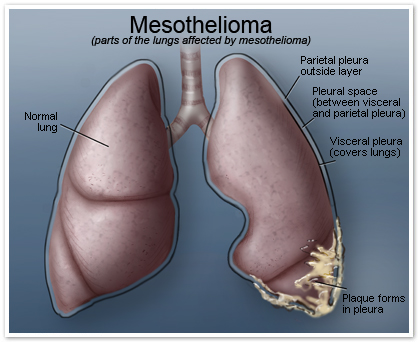 The cavities within the body encompassing the chest, abdomen, and heart are surround by a membrane of cells known as the mesothelium. Mesothelial cells assist in general organ functions. The mesothelium is particularly important to organs that are commonly in motion, such as expansion or contraction of the lungs, stomach, or heart. Lubrication from the mesothelial cells allows free range of motion within the body. The mesothelium of the chest, abdomen, and cardiac cavity are called the pleura, the peritoneum, and the pericardium, respectively. Each of these groupings of mesothelial cells are extremely critical to the functions of the body structures which they encompass.
Malignancies (cancerous tumors) occurring within the mesothelial membranes are known as malignant mesothelioma, or simply mesothelioma. Benign tumors of the mesothelium are known to occur, but are much rarer than the more common malignant cancer.
While tumors of the mesothelium were first recognized in the late 18th century, it was not until the middle of the 20th century that this particular cancer was studied and examined with more detail. It was at this time where suspicions of the cancer’s causal relationship with asbestos exposure became more substantiated. A joint research venture through the Department of Thoracic Surgery at the University of the Witswater and/Johannesburg General Hospital in South Africa provided the most compelling evidence of the nexus between asbestos exposure and the development of pleural mesothelioma.
Incidence of mesothelioma is still quite rare, with only 2,500-3000 diagnoses in the United States each year. There was a spike in reported diagnoses between 1970 and 1984, which has been attributed to the latency period between diagnosis and the height of industrial exposures, which occurred roughly 40-60 years prior to this time. Exposure was common in nearly all industries but was particularly common in the WWII-era military industrial cycle, including Navy Shipyards.
Although this cancer is much more common in men over the age of 60 (largely attributed to the industrial exposures within male-dominated industries), mesothelioma in women and children has been described as well. Mesothelioma causes for diagnosis in women and children are mainly attributed to secondary exposure to asbestos, as it was not uncommon for men to bring asbestos back into the home on their body or clothing if proper cleaning facilities were not available on site.
Malignant mesothelioma is the most serious of all asbestos-related diseases. Although uncommon, mesothelioma cancer is no longer considered rare. The primary cause and risk factor for mesothelioma is exposure to asbestos.
Making a correct mesothelioma diagnosis is particularly difficult for doctors because the disease often presents with symptoms that mimic other common ailments. There is no known cure for mesothelioma, but treatments such as surgery and chemotherapy have helped to improve the typical mesothelioma prognosis.
Pleural mesothelioma (affecting the lung’s protective lining in the chest cavity) represents about three quarters of all mesothelioma incidence. Peritoneal mesothelioma which affects the abdominal cavity and pericardial mesothelioma, which affects the cardiac cavity, comprise the remainder. Testicular mesothelioma is extremely rare and is typically presents with metastases of the peritoneal variety. There are three recognized mesothelioma cell-types. Between 50 and 70% of all mesotheliomas are of the epithelial variety. While prognosis is generally poor, it is considered less aggressive than sarcomatoid mesothelioma and biphasic mesothelioma, which comprise the remainder of cell type diagnoses.
The cavities within the body encompassing the chest, abdomen, and heart are surround by a membrane of cells known as the mesothelium. Mesothelial cells assist in general organ functions. The mesothelium is particularly important to organs that are commonly in motion, such as expansion or contraction of the lungs, stomach, or heart. Lubrication from the mesothelial cells allows free range of motion within the body. The mesothelium of the chest, abdomen, and cardiac cavity are called the pleura, the peritoneum, and the pericardium, respectively. Each of these groupings of mesothelial cells are extremely critical to the functions of the body structures which they encompass.Malignancies (cancerous tumors) occurring within the mesothelial membranes are known as malignant mesothelioma, or simply mesothelioma. Benign tumors of the mesothelium are known to occur, but are much rarer than the more common malignant cancer.
While tumors of the mesothelium were first recognized in the late 18th century, it was not until the middle of the 20th century that this particular cancer was studied and examined with more detail. It was at this time where suspicions of the cancer’s causal relationship with asbestos exposure became more substantiated. A joint research venture through the Department of Thoracic Surgery at the University of the Witswater and/Johannesburg General Hospital in South Africa provided the most compelling evidence of the nexus between asbestos exposure and the development of pleural mesothelioma.
Incidence of mesothelioma is still quite rare, with only 2,500-3000 diagnoses in the United States each year. There was a spike in reported diagnoses between 1970 and 1984, which has been attributed to the latency period between diagnosis and the height of industrial exposures, which occurred roughly 40-60 years prior to this time. Exposure was common in nearly all industries but was particularly common in the WWII-era military industrial cycle, including Navy Shipyards.
Although this cancer is much more common in men over the age of 60 (largely attributed to the industrial exposures within male-dominated industries), mesothelioma in women and children has been described as well. Mesothelioma causes for diagnosis in women and children are mainly attributed to secondary exposure to asbestos, as it was not uncommon for men to bring asbestos back into the home on their body or clothing if proper cleaning facilities were not available on site.
Wednesday, 21 September 2011
Mesothelioma Invades The Chest Wall Or The Esophagus During
Mesothelioma is a shape of cancer that is commonly stimulated by asbestos exposure. Mesothelioma is cancer that occurs in the mesothelium.
Mesothelioma:

Mesothelioma is a case of cancer affecting the cells of mesothelial lining in the chest and abdomen. Mesothelioma cancer can develop in the tissues covering the lungs or the abdomen. Mesothelioma has moreover been established in the stomach and another abdominal organs but it is a large amount rarer in those areas than are both pleural mesothelioma and peritoneal mesothelioma. Mesothelioma can besides occur in the ovaries and scrotum. Mesothelioma invades the chest wall or the esophagus during the subsequent stage.Mesothelioma moreover gets a long period to develop (typically 15-40 years), so patients nowadays can have been discovered prior to the 1980s when asbestos was not extremely regulated. Mesothelioma is not caused by smoking, as lung cancer so often is.
Symptoms:
Symptoms One of the nearly all ordinary symptoms of mesothelioma is an accumulation of fluid between the lining of the lung and the chest cavity. Symptoms include:abdominal painascites, or an abnormal buildup of fluid in the abdomen a volume in the abdomen troubles with bowel work load loss. Symptoms such as difficulty swallowing, trouble, or swelling of the narrow part and confront can be indications that the cancer has spread beyond the mesotheliom to other components of the body. Symptoms of pleural mesothelioma include persistent hurt in the chest and big trouble breathing caused by pleural effusion, or an accumulation of adjustable in the pleural lining Cough, load loss, and fever are besides common symptoms. Symptoms of peritoneal mesothelioma take in weight demise and abdominal pain and swelling due to a buildup of smooth in the abdomen. Symptoms of mesothelioma might not appear until 20 to 50 yr after exposure to asbestos.
Diagnosis:
Diagnosis:
The key to long-term survival from treatment of mesothelioma life expectancy is early diagnosis, which enables the best potential for success from regular therapies. Diagnosis begins with a review of the patient’s medical chronicle, together with any chronicle of asbestos exposure. Diagnosis of Mesothelioma is based on a pathological exam, more ordinarily mentioned to as a biopsy.Since this disease could be hard to diagnosis and pricey to handle, it may require the consultation of an seasoned attorney. When conclusive diagnosis could not be made from adjustable samples, diagnosis is frequently finished through a surgical procedure termed a throrascopy.The average age at diagnosis of mesothelioma is betwixt 50 and 70 years old, with humans going involved 3 to 5 times additional often than women. The diagnosis may be suspected with chest X-ray and CT scan, and is confirmed with a biopsy (tissue sample) and microscopic examination. The median survival period is 17 calendar months, with ten percent of patients living for three years after diagnosis.
Tuesday, 20 September 2011
Mesothelioma Rate in East England Increasing Steadily
Research by British Broadcasting Company (BBC) Look East confirms what many working class Brits already know – deaths from asbestos-caused cancer are at an all-time high in England, particularly in the eastern portion of the country.
“In the east of England, the male death rate from mesothelioma increased from 14.8 per million between 1982 and 1984 to 66.4 per million between 2006 and 2008,” notes a BBC article published in late August.
In the city of Essex, for example, 115 individuals died of industrial diseases in the calendar year 2010 and most of those were attributed to asbestos exposure. The only area that saw a greater increase than Essex was the West Midlands. Essex’s long history of shipbuilding contributes greatly to those numbers as does the construction industry.
“In the east of England, the male death rate from mesothelioma increased from 14.8 per million between 1982 and 1984 to 66.4 per million between 2006 and 2008,” notes a BBC article published in late August.
In the city of Essex, for example, 115 individuals died of industrial diseases in the calendar year 2010 and most of those were attributed to asbestos exposure. The only area that saw a greater increase than Essex was the West Midlands. Essex’s long history of shipbuilding contributes greatly to those numbers as does the construction industry.
Monday, 19 September 2011
Asbestos Mesothelioma
Asbestos is a fibrous material that was often used for it's
great insulating properties. When intact, the fibers perform effectively and
provide no danger to humans. However, the fibrous material breaks down
tremendously with age, and when the individual fibers are inhaled into the
lungs, asbestosis may occur in exposed individuals. Asbestosis is a condition
where the lungs develop scar tissue.
This scarring can and in most cases does result in the
onset of Asbestos Mesothelioma. One of the most dangerous cancers known to the
medical community, this condition has been the reason for controversy
surrounding the use of asbestos at all. Generally, buildings with asbestos
require complete removal and quarantine of all materials until inspections are
performed.
In this type of cancer, the lining of the lungs becomes
inflamed, cells grow abnormally and the condition is extremely painful for the
patient. The condition can be either benign or malignant, both requiring
treatment although only the malignant variety is known to spread to surrounding
tissues and organs in the body.
The incubation period for this type of cancer can range
from twenty to fifty years from the time of exposure. Many new cases are being
discovered every day, however the number of new cases is anticipated to heavily
decline as a result of removal and regulatory efforts regarding the use of
asbestos.
great insulating properties. When intact, the fibers perform effectively and
provide no danger to humans. However, the fibrous material breaks down
tremendously with age, and when the individual fibers are inhaled into the
lungs, asbestosis may occur in exposed individuals. Asbestosis is a condition
where the lungs develop scar tissue.
This scarring can and in most cases does result in the
onset of Asbestos Mesothelioma. One of the most dangerous cancers known to the
medical community, this condition has been the reason for controversy
surrounding the use of asbestos at all. Generally, buildings with asbestos
require complete removal and quarantine of all materials until inspections are
performed.
In this type of cancer, the lining of the lungs becomes
inflamed, cells grow abnormally and the condition is extremely painful for the
patient. The condition can be either benign or malignant, both requiring
treatment although only the malignant variety is known to spread to surrounding
tissues and organs in the body.
The incubation period for this type of cancer can range
from twenty to fifty years from the time of exposure. Many new cases are being
discovered every day, however the number of new cases is anticipated to heavily
decline as a result of removal and regulatory efforts regarding the use of
asbestos.
Sunday, 18 September 2011
Performed to see the Symptoms of Mesothelioma Preferably
Aggressive surgical operation requires removal of the lung, the pleura, the diaphragm and the pericardium by a operation, which is known as added pleural pneumonectomy. The purpose to chase this method is to physically remove as much of the tumor as doable. It is in fact taking a bold technique to do away with the disease-hence the name is “Aggressive surgery”.This surgical operation is extremely complicated and involves high chance. This is because of the fact that on that point are possible chances of death due to the same inside a calendar month. More pleural pneumonectomy is thus usually carry out on younger patients who are in excellent strength and are in a position to tolerate the surgical process.

Palliative operations are usually performed when the cancer is in its advanced form. These processes are performed to see the symptoms of mesothelioma preferably than heal them. Pleurectomy (also decortications) is the routine to surgically remove the pleura. This method reduces the hurt stimulated by the cancerous mass and might besides forbid the recurrence of pleural effusion (fluid collection which gets tremendous breathlessness). For patients suffering from peritoneal mesothelioma, finish surgical removal of the whole tumor is not completely doable. In this subject the surgical operation aims to extenuate the symptoms, such as ascites,
Chemotherapy
Chemotherapy is the technique in which drugs are excercised to treat mesothelioma. It has been noticed that this method is partially succesfull. This is because the diligent recovers partially after making use of drugs or compounding of drugs (In fact the efficacy of this method gains, if combining of drugs are applied at the same time.) A few of these combinations have proved prosperous and latest drugs are lasts built for the treatment of this cancer.
In this method the tumor is killed by using radiation doses. However, with the avail of this operation, killing the tumor cells is quite hard. This is because of the fact that it is challenging to specifically locate the malignant cells. Besides the heart, lungs and new organs might surround the alike, and they are at the risk of achieving damaged by the radiation dosage. Yet lighter doses of radiation can be excercised to thicken the disease to a certain extent.
Doubled Therapy
Several chemotherapy and radiation are excercised in conjunction after the operation of the surgical operation. They some assist in killing any remaining tumor cells that were not removed by surgical operation and might also avail in relieving symptoms of the disease like chest pain.The treatment techniques, which are represented above, are through paths of treating a human being suffering from mesothelioma. However doctors and researchers are constantly on the lookout for recent ways to treat mesothelioma. The requisite for the evolution of supplementary directions to treat patients struggling from mesothelioma arises because of the intricate nature of different sorts of cancers, and because patients respond differently to varying kinds of medical concern.
Saturday, 17 September 2011
Conventional Treatments
Conventional mesothelioma therapies include surgery, radiation and chemotherapy. You should keep in mind that if you choose one course of action for mesothelioma treatment, you may preclude other courses. All of your options should be considered as soon as possible.
Depending on the stage of a mesothelioma, surgery may be used to remove the cancer and some of the surrounding tissue. Often, however, an operation is not appropriate and the patient may have only minimally invasive procedures to relieve symptoms. A thoracentesis, where fluid in the chest is removed by placing a needle into the chest cavity, may be done to make a patient more comfortable. Sometimes talc or an antibiotic may be injected into the chest cavity to try to prevent the fluid from returning. These techniques are successful in controlling the fluid, at least temporarily, in as many as 90% of patients. Because pleural fluid can compress the lung and cause shortness of breath, these procedures can help patients breathe more easily, however, they do not cure the cancer. In the case of peritoneal mesothelioma, a needle may be inserted into the abdomen to drain the fluid. Similarly, a needle inserted into the pericardium (sac around the heart) can drain the fluid caused by pericardial mesothelioma and help relieve circulatory problems. However, draining this fluid may result in complications. Sometimes the cancer cells spread along the needle path, and a tumor nodule may form under the skin of that area.
Mesothelioma Surgery
Depending on the stage of a mesothelioma, surgery may be used to remove the cancer and some of the surrounding tissue. Often, however, an operation is not appropriate and the patient may have only minimally invasive procedures to relieve symptoms. A thoracentesis, where fluid in the chest is removed by placing a needle into the chest cavity, may be done to make a patient more comfortable. Sometimes talc or an antibiotic may be injected into the chest cavity to try to prevent the fluid from returning. These techniques are successful in controlling the fluid, at least temporarily, in as many as 90% of patients. Because pleural fluid can compress the lung and cause shortness of breath, these procedures can help patients breathe more easily, however, they do not cure the cancer. In the case of peritoneal mesothelioma, a needle may be inserted into the abdomen to drain the fluid. Similarly, a needle inserted into the pericardium (sac around the heart) can drain the fluid caused by pericardial mesothelioma and help relieve circulatory problems. However, draining this fluid may result in complications. Sometimes the cancer cells spread along the needle path, and a tumor nodule may form under the skin of that area.Friday, 16 September 2011
Mesothelioma Symptoms Of The Peritoneum
Patients suffering from mesothelioma rarely manifest symptoms at the early stage. Ordinarily, the symptoms demonstrate from 15 to 50 years after initial exposure to asbestos. The development of cancer involves a gradual process without you understanding that it had long been occurred inside you. Unfortunately, some of the patients are asymptomatic. They are clueless that they’re already running after their lives. The mesothelioma symptoms are very comparable to less threatening diseases, hence it is difficult to diagnose. If the cancer has already metastasized to other parts of the body, the major symptoms would include pain, difficulty swallowing or dysphagia and swelling in the neck and face. Further, the symptoms vary depending on the type of mesothelioma.
Pleural mesothelioma is regarded as the common form of mesothelioma. The mesothelioma symptoms result from the thickening of the pleural membrane. It offers persistent dry or raspy cough, hemoptysis or coughing up blood, dysphagia, night sweats or fever, unexplained 10% weight loss, fatigue, persistent pain in the lower back or side of the chest, painful breathing, shortness of breath or dyspnea and the presence of lumps. These symptoms, with the exception of the lumps, are typical to minor illness. However, the unique sign of pleural mesothelioma is pleural effusion. It is an accumulation of fluid between the lungs and chest cavity making the breathing difficult and painful.
Wednesday, 14 September 2011
Performed to see the Symptoms of Mesothelioma Preferably
Aggressive surgical operation requires removal of the lung, the pleura, the diaphragm and the pericardium by a operation, which is known as added pleural pneumonectomy. The purpose to chase this method is to physically remove as much of the tumor as doable. It is in fact taking a bold technique to do away with the disease-hence the name is “Aggressive surgery”.This surgical operation is extremely complicated and involves high chance. This is because of the fact that on that point are possible chances of death due to the same inside a calendar month. More pleural pneumonectomy is thus usually carry out on younger patients who are in excellent strength and are in a position to tolerate the surgical process.
Palliative operations are usually performed when the cancer is in its advanced form. These processes are performed to see the symptoms of mesothelioma preferably than heal them. Pleurectomy (also decortications) is the routine to surgically remove the pleura. This method reduces the hurt stimulated by the cancerous mass and might besides forbid the recurrence of pleural effusion (fluid collection which gets tremendous breathlessness). For patients suffering from peritoneal mesothelioma, finish surgical removal of the whole tumor is not completely doable. In this subject the surgical operation aims to extenuate the symptoms, such as ascites,
Peritoneal Mesothelioma is More Uncommon Pleural Mesothelioma
Peritoneal mesothelioma is more uncommon than pleural mesothelioma, but these two typically malignant mesotheliomas is often equally tragic. Peritoneal mesothelioma begins inside the abdominal cavity, as opposed to the lungs and pleural regions of pleural mesothelioma. “Peritoneal” means it has to do with all the peritoneum, which is a membrane that surrounds the abdominal area. “Pleural” is the pleura which is a membrane that surrounds the lungs. There is also a “pericardial” mesothelioma which targets the heart membrane first.The lungs, abdominal area and heart all have a membrane made up of mesothelial cells, named the mesothelium. A cancerous attack of these membrane areas are mesotheliomas. Asbestos may be the reason for peritoneal mesothelioma, pleural mesothelioma and pericardial mesothelioma in well over 90% of the cases.

There are some rare recorded cases of malignant mesothelioma when asbestos exposure was not identified. If you have been exposed to asbestos, there is a high chance you will are afflicted by an asbestos-caused disease like asbestosis or pleural plaques. However, not every asbestos-caused diseases are fatal.Peritoneal mesothelioma, pleural mesothelioma and pericardial mesothelioma can be fatal malignant mesotheliomas which spread uncontrollably, or they may be benign, when the tumor stays where it is and can likely be removed. Unexplainable fat loss is a mesothelioma symptom which may occur in as many as 90% of benign and malignant mesothelioma. Generally, benign mesothelioma is likely to show less symptoms than malignant mesothelioma. Mesothelioma symptoms for peritoneal mesothelioma almost always includes abdominal pain. It is because there is excess fluid between your peritoneal membrane and the abdomen walls. Pleural mesothelioma has excess fluid inside the pleural area which causes shortness of breath and chest pain.
Monday, 12 September 2011
Mesothelioma Invades The Chest Wall Or The Esophagus During
Mesothelioma is a shape of cancer that is commonly stimulated by asbestos exposure. Mesothelioma is cancer that occurs in the mesothelium.
Mesothelioma:
Mesothelioma is a case of cancer affecting the cells of mesothelial lining in the chest and abdomen. Mesothelioma cancer can develop in the tissues covering the lungs or the abdomen. Mesothelioma has moreover been established in the stomach and another abdominal organs but it is a large amount rarer in those areas than are both pleural mesothelioma and peritoneal mesothelioma. Mesothelioma can besides occur in the ovaries and scrotum. Mesothelioma invades the chest wall or the esophagus during the subsequent stage.Mesothelioma moreover gets a long period to develop (typically 15-40 years), so patients nowadays can have been discovered prior to the 1980s when asbestos was not extremely regulated. Mesothelioma is not caused by smoking, as lung cancer so often is.
Symptoms:
Symptoms One of the nearly all ordinary symptoms of mesothelioma is an accumulation of fluid between the lining of the lung and the chest cavity. Symptoms include:abdominal painascites, or an abnormal buildup of fluid in the abdomen a volume in the abdomen troubles with bowel work load loss. Symptoms such as difficulty swallowing, trouble, or swelling of the narrow part and confront can be indications that the cancer has spread beyond the mesotheliom to other components of the body. Symptoms of pleural mesothelioma include persistent hurt in the chest and big trouble breathing caused by pleural effusion, or an accumulation of adjustable in the pleural lining Cough, load loss, and fever are besides common symptoms. Symptoms of peritoneal mesothelioma take in weight demise and abdominal pain and swelling due to a buildup of smooth in the abdomen. Symptoms of mesothelioma might not appear until 20 to 50 yr after exposure to asbestos.
Sunday, 11 September 2011
Mesothelioma Law Firm

 Early, Lucarelli, Sweeney & Strauss is nationally recognized for our representation of product liability and mesothelioma victims, and for our understanding of and compassion for injured parties and their families. Our experience in these matters spans two decades, and we have been given Martindale-Hubbell's highest rating.
Early, Lucarelli, Sweeney & Strauss has consistently been at the top of the list in terms of per case settlement dollars obtained for its asbestos clients. We represent in excess of one thousand eight hundred victims of asbestos disease in their cases against the asbestos industry. Hundreds of these victims suffer from mesothelioma cancer.
We are currently licensed to practice in: California, Connecticut, Illinois, Massachusetts, Missouri, New Hampshire, New Jersey, New York, Pennsylvania, Rhode Island, and Washington D.C. Almost two decades of asbestos law experience has resulted in close working relationships with mesothelioma attorneys throughout the United States for the representation of individuals with asbestos cancer.
We have dedicated extensive resources to gathering information and evidence against the asbestos industry. We will carefully explain your legal rights to you.
Mesothelioma Law
 Mesothelioma is an occupational disease caused by exposure to asbestos. Most of the individuals diagnosed with this rare form of cancer are those who worked with the toxic mineral at a variety of occupations including shipbuilding, construction work, welding, insulating, auto repair, oil refinery and chemical plant work, plumbing, and many more. They may have also been exposed at home through do-it-yourself projects. For decades before the U.S. halted all new uses of asbestos, scientists, doctors, and others knew it was toxic, yet it stayed on the market and companies continued to use it.
Though it's been more than 30 years since the government issued guidelines and warnings about asbestos use, the dangerous mineral can still be found in a high percentage of the homes and commercial buildings that were constructed prior to 1980, so exposure is still a real possibility. Furthermore, it sometimes takes up to 50 years after exposure for victims to be diagnosed with mesothelioma cancer because of the disease's long latency period. Hence, those exposed in the 60s and 70s can still be diagnosed with the disease in the near future.
Lawsuits and Compensation
It has been proven that, in many cases, owners or operators of plants, factories, or other businesses that made use of asbestos knew that the mineral was hazardous to the health of their employees yet no moves were taken to remove asbestos or to replace it with a safer material. Furthermore, those who manufactured asbestos-containing materials were also familiar with its hazardous qualities yet continued to make and market them. As a result, many individuals were wrongfully exposed to this toxic material and many were sickened as well.During the last few decades, countless individuals who were injured by asbestos and developed mesothelioma have filed lawsuits against asbestos manufacturers and/or the owners of the companies responsible for their exposure in order to seek compensation. Treatment for this aggressive form of cancer is expensive and results in extensive medical bills and loss of income. Furthermore, victims of the disease have a right to be compensated for pain and suffering. In addition, they may wish to seek funds that will insure that their families will be secure after they pass away.
Mesothelioma Lawyer
Early, Lucarelli, Sweeney & Strauss has represented mesothelioma victims and their families honestly and effectively for over 30 years.
For over three decades, the mesothelioma law firm of Early, Lucarelli, Sweeney and Strauss has specialized in asbestos litigation. In that time, ELSS has helped thousands of mesothelioma victims get the financial compensation they deserved for the injuries they sustained from asbestos products made and sold by negligent asbestos companies.Choosing a good mesothelioma lawyer is imperative to ensuring that you will be awarded the highest settlement dollars for your case.
In this section, you can learn more about our firm, our experienced legal team and the outstanding results that we have achieved for our clients. We are confident that after you learn more about us, the clients we serve and our past track record, you will see how we can put our decades of experience winning mesothelioma settlements to work for you and your family.Initial consultations at Early, Lucarelli, Sweeney and Strauss are always free of charge and are designed to help us evaluate your case and measure your chance for a viable, successful lawsuit. In addition, because Early, Lucarelli, Sweeney and Strauss operates on a contingency fee basis, the client pays nothing unless we succeed in your behalf and money is recovered.
Filing a Mesothelioma Lawsuit
To start the process of seeking compensation for a mesothelioma client, ELSS begins with a brief introductory meeting. During this meeting, an attorney from ELSS will outline the various steps of the legal process; address any questions or concerns you may have related to the legal process; and discuss the ways in which a mesothelioma client has been exposed to asbestos.After this introductory meeting, ELSS will work on your behalf to collect all diagnosing medical reports from the medical facilities where you were treated. Before a mesothelioma lawsuit is filed, ELSS performs a thorough work history investigation of the diagnosed party. ELSS will collect work history records, including, union records, military service records and other documents to substantiate employment history. In addition to interviewing the mesothelioma client, ELSS will also identify any potential family members, co-workers, and other product identification witnesses who can assist in providing details about the work history and potential asbestos exposure in the case.
After we have completed a thorough product identification and work history investigation, our next step is to identify potential recoveries through asbestos trusts. A number of companies have admitted past asbestos liability and have set up asbestos trusts to compensate mesothelioma clients who present qualifying claims. ELSS is familiar with these asbestos trusts and their requirements for successful claims submission. For the most part, compensation through these trusts happens relatively quickly assuming your particular case meets each trust’s exposure criteria.
Shopkeeper's Mesothelioma Diagnosis Attributed to Workmen's Clothes
An 80-year-old shop owner from York, England, who lived and worked near the city’s carriage works but never worked directly with asbestos, has succumbed to malignant mesothelioma. A coroner’s inquest determined that Connie Spence probably developed the disease due to exposure to asbestos dust brought into her shop on the overalls of carriage works employees that frequented her shop.
Asbestos and asbestos products have long been associated with heavy industry in England and in other countries of the world. In particular, York Carriage Works employees have had a long history of asbestos exposure and many have died of malignant mesothelioma. Other industries in York, a seaside city that has long been known as a manufacturing center, also used asbestos and many now call the city an “asbestos time bomb.”
A recent article in The Press of York noted that Connie operated a shop near the York Carriage Works for decades, catering to men who would come into her establishment covered with a variety of dust and dirt from their work at the plant, which built railway cars. Blue asbestos, one of the most toxic forms of the mineral, was used regularly in the building of the coaches.
Asbestos and asbestos products have long been associated with heavy industry in England and in other countries of the world. In particular, York Carriage Works employees have had a long history of asbestos exposure and many have died of malignant mesothelioma. Other industries in York, a seaside city that has long been known as a manufacturing center, also used asbestos and many now call the city an “asbestos time bomb.”
A recent article in The Press of York noted that Connie operated a shop near the York Carriage Works for decades, catering to men who would come into her establishment covered with a variety of dust and dirt from their work at the plant, which built railway cars. Blue asbestos, one of the most toxic forms of the mineral, was used regularly in the building of the coaches.
Genetic mutation linked to mesothelioma susceptibility
Researchers at the Fox Chase Cancer Center and University of Hawaii Cancer Center are attempting to study the role of a genetic mutation in individuals, known as BAP1, and the susceptibility to certain cancers. Initial research has shown that those who carry the gene may be a particularly heightened risk of developing both malignant mesothelioma and melanoma of the eye.
Mesothelioma, which is most commonly linked to asbestos and erionite exposure, is an aggressive malignancy affecting the lining of the lungs, chest, and abdominal cavity. The disease has no known cure.
The hope is that the study can determine who may be most at risk for developing malignant mesothelioma, particularly among those who have knowingly been exposed to asbestos or erionite.
Mesothelioma, which is most commonly linked to asbestos and erionite exposure, is an aggressive malignancy affecting the lining of the lungs, chest, and abdominal cavity. The disease has no known cure.
The hope is that the study can determine who may be most at risk for developing malignant mesothelioma, particularly among those who have knowingly been exposed to asbestos or erionite.
Saturday, 10 September 2011
Mesothelioma Lawyer
Early, Lucarelli, Sweeney & Strauss has represented mesothelioma victims and their families honestly and effectively for over 30 years.
For over three decades, the mesothelioma law firm of Early, Lucarelli, Sweeney and Strauss has specialized in asbestos litigation. In that time, ELSS has helped thousands of mesothelioma victims get the financial compensation they deserved for the injuries they sustained from asbestos products made and sold by negligent asbestos companies.Choosing a good mesothelioma lawyer is imperative to ensuring that you will be awarded the highest settlement dollars for your case.
In this section, you can learn more about our firm, our experienced legal team and the outstanding results that we have achieved for our clients. We are confident that after you learn more about us, the clients we serve and our past track record, you will see how we can put our decades of experience winning mesothelioma settlements to work for you and your family.Initial consultations at Early, Lucarelli, Sweeney and Strauss are always free of charge and are designed to help us evaluate your case and measure your chance for a viable, successful lawsuit. In addition, because Early, Lucarelli, Sweeney and Strauss operates on a contingency fee basis, the client pays nothing unless we succeed in your behalf and money is recovered.
Friday, 9 September 2011
Mesothelioma Awareness Day celebrated once again on September 26th
Mark your calendar! National Mesothelioma Awareness Day is right around the corner. September 26th is once again the day selected by the United States Congress to raise public awareness of the cause and effects of mesothelioma, a rare cancer of the protective lining of the lungs, heart, chest and abdomen that is caused almost exclusively by prolonged asbestos exposure. Nearly 3,000 Americans are diagnosed with mesothelioma each year.
Despite regulations imposed by the Environmental Protection Agency, and the increasing number of lives claimed by mesothelioma, lung cancer, and other asbestos-related illness, an estimated 1.3 million construction and general industry worker are still regularly exposed to asbestos. Traditionally, industry workers such as shipyard and factory workers, plumbers, machinists, mechanics and electricians are those most commonly exposed to asbestos, and military and navy veterans also commonly suffer from asbestos cancer because of the toxic mineral's presence in munitions and ships. However, the discovery of new contaminants and the many tragic natural disasters that have torn through asbestos tainted buildings have put all Americans at risk.
The collapse of the New York City's Twin Towers on 9/11 exposed thousands of first responders to asbestos and other fatal contaminants, as did Hurricane Katrina's destruction of New Orleans. In addition, the mineral erionite, which is found in road gravel in several US states, has now been determined to also cause malignant mesothelioma.
There is no known mesothelioma cure, so raising awareness of the need for research funding is also critical. Patients currently only survive about one year after diagnosis, but many studies and clinical trials are testing new and improved treatments that will hopefully help increase mesothelioma life expectancy.
Despite regulations imposed by the Environmental Protection Agency, and the increasing number of lives claimed by mesothelioma, lung cancer, and other asbestos-related illness, an estimated 1.3 million construction and general industry worker are still regularly exposed to asbestos. Traditionally, industry workers such as shipyard and factory workers, plumbers, machinists, mechanics and electricians are those most commonly exposed to asbestos, and military and navy veterans also commonly suffer from asbestos cancer because of the toxic mineral's presence in munitions and ships. However, the discovery of new contaminants and the many tragic natural disasters that have torn through asbestos tainted buildings have put all Americans at risk.
The collapse of the New York City's Twin Towers on 9/11 exposed thousands of first responders to asbestos and other fatal contaminants, as did Hurricane Katrina's destruction of New Orleans. In addition, the mineral erionite, which is found in road gravel in several US states, has now been determined to also cause malignant mesothelioma.
There is no known mesothelioma cure, so raising awareness of the need for research funding is also critical. Patients currently only survive about one year after diagnosis, but many studies and clinical trials are testing new and improved treatments that will hopefully help increase mesothelioma life expectancy.
Thursday, 8 September 2011
Mesothelioma Tips: 3 Different Types of Mesothelioma
 Prolonged exposure to asbestos for a long time might occur to mesothelioma.
Studies show that inhalation/ingestion of asbestos fiber may be the only known cause of the illness.
This type of cancer is known as rare but about 2,000 people are diagnosed in the usa each year.
Diagnosis is quite difficult because symptoms typically appear after several decades (30 to 50 years) and sometimes resemble those of various other common illnesses.
Prognosis is normally poor, particularly if the disease reached the advanced stages before diagnosis.
Cancer is obviously separated by 50 percent forms: benign and malignant.
Benign mesothelioma is extremely rare; so any mention of condition often describes a malignant tumor.
Three main forms of cancerous cells in mesothelioma include: epithelioid, sarcomatoid, and mixed/biphasic (combined epithelioid and sarcomatoid).
Three Main Types of Mesothelioma that Affects Different Parts of the body
1. Pleural Mesothelioma.
Wednesday, 7 September 2011
Cure Mesothelioma Cancer the Natural Way
(NaturalNews) Mesothelioma is a rare cancer caused by exposure to asbestos. Is it possible to cure mesothelioma the natural way, given its poor prognosis? The answer is a resounding yes! In recent years, Paul Kraus, Rhio O`Connor and others chose to avoid conventional cancer therapies, feeling that they would have a better chance of survival by using supplements, herbs, rest and a nutritious diet. In so doing, they have provided living proof that curing this malignant cancer and living a long and healthy life is possible.
What Exactly is Mesothelioma Cancer?
A person may have been exposed to asbestos at work and inhaled asbestos dust or fibers. The fibers then become lodged in the membranes that surround the lungs, heart or abdomen. Over a period of time, these fibers cause tissue abnormalities, resulting in mesothelioma cancer.
Symptoms of Mesothelioma
Many people are not too worried when mesothelioma symptoms first appear, since the symptoms are vague and are sometimes thought to be nothing more than a bad case of flu. Symptoms can include shortness of breath, chest pain and/or a persistent cough.
Once diagnosed, mesothelioma carries a very poor prognosis particularly because it is a cancer that is often diagnosed late. Many people diagnosed with this disease are told to "put your affairs in order".
Conventional treatments include chemotherapy, radiation and surgery.
Hope comes in the form of those who have survived mesothelioma. A closer look at their methods of fighting cancer the natural way can encourage others who have contracted the disease and help them to see that life can be extended for many years.
Mesothelioma Survivors
Mesothelioma survivor Paul Kraus was determined to fight his peritoneal mesothelioma cancer the natural way. He became a vegetarian and started a rigorous anti-cancer diet which included organic fresh fruits and vegetables, grains, nuts and rice. In addition, he added many vitamins and supplements to his daily routine, consumed freshly squeezed juices and tried a treatment known as "ozone therapy". The rationale for ozone therapy is that cancer cells do not thrive in an oxygenated environment.
Paul Kraus' prognosis was very poor and he was told by his doctors, very honestly, that his chance of success with chemotherapy was not high at all. In addition, he was informed that the quality of his life would be severely compromised by the heavy chemotherapy treatments that would be prescribed. He was given a year to live but has survived a further eleven years by going the natural route.
What Exactly is Mesothelioma Cancer?
A person may have been exposed to asbestos at work and inhaled asbestos dust or fibers. The fibers then become lodged in the membranes that surround the lungs, heart or abdomen. Over a period of time, these fibers cause tissue abnormalities, resulting in mesothelioma cancer.
Symptoms of Mesothelioma
Many people are not too worried when mesothelioma symptoms first appear, since the symptoms are vague and are sometimes thought to be nothing more than a bad case of flu. Symptoms can include shortness of breath, chest pain and/or a persistent cough.
Once diagnosed, mesothelioma carries a very poor prognosis particularly because it is a cancer that is often diagnosed late. Many people diagnosed with this disease are told to "put your affairs in order".
Conventional treatments include chemotherapy, radiation and surgery.
Hope comes in the form of those who have survived mesothelioma. A closer look at their methods of fighting cancer the natural way can encourage others who have contracted the disease and help them to see that life can be extended for many years.
Mesothelioma Survivors
Mesothelioma survivor Paul Kraus was determined to fight his peritoneal mesothelioma cancer the natural way. He became a vegetarian and started a rigorous anti-cancer diet which included organic fresh fruits and vegetables, grains, nuts and rice. In addition, he added many vitamins and supplements to his daily routine, consumed freshly squeezed juices and tried a treatment known as "ozone therapy". The rationale for ozone therapy is that cancer cells do not thrive in an oxygenated environment.
Paul Kraus' prognosis was very poor and he was told by his doctors, very honestly, that his chance of success with chemotherapy was not high at all. In addition, he was informed that the quality of his life would be severely compromised by the heavy chemotherapy treatments that would be prescribed. He was given a year to live but has survived a further eleven years by going the natural route.
Monday, 5 September 2011
Nine Options For Mesothelioma Curing
As with any cancer, cure for Mesothelioma depends on the place of the cancer, the progression of the disease, the age as well as state of health of the patient.
Cure options include:
1. If the analysis is completed in the early degrees surgical procedure can even be recommended to remove all cancerous tissues. This capability thoracoscopy, VATS or video assisted thoracic surgery, mediastinoscopy (used for staging), or laproscopy. Often, medical doctors will recommend palliative techniques like chest tube drainage and pleurodesis, thoracoscopy and pleurodesis, pleuroperitonial shunt, or pleurectomy, which deal with the signs of mesothelioma quite than the ailment.
2. Radiation is prescribed aggressively for mesothelioma sufferers and is commonly given in aggregate with surgery or in order to manage symptoms, palliatively. Research on using radiation cure using implants or UV gentle treatment is in development as classic radiation treatment damages surrounding fit tissue.
3. Anti-cancer drugs damage cancer cells and evade their spread. In mesothelioma, chemotherapy is now not regarded to be healing. The aim is to evade spread of the sickness; decrease the tumor prior to surgery, commonly used as neoadjuvant treatment; to annihilate any remains of the tumor in the physique publish surgical procedure; and to relieve pain and other discomfort, palliative chemotherapy. Specialists recommend prescribing premetrexed along with cisplastin.
4. Organic reaction modifiers, brms, are used in cure. Those enhance the applications of the immune device; alter metabolic reactions that promote growth of cancers; alter cancer cell department; block or opposite tactics that lead to formation of cancers; and prevent unfold of cancer.
5. Gene therapy, where makes an attempt are made to appropriate the gene collection that reasons the cancer. This is of two kinds, alternative gene treatment and knockout gene cure.
Cure options include:
1. If the analysis is completed in the early degrees surgical procedure can even be recommended to remove all cancerous tissues. This capability thoracoscopy, VATS or video assisted thoracic surgery, mediastinoscopy (used for staging), or laproscopy. Often, medical doctors will recommend palliative techniques like chest tube drainage and pleurodesis, thoracoscopy and pleurodesis, pleuroperitonial shunt, or pleurectomy, which deal with the signs of mesothelioma quite than the ailment.
2. Radiation is prescribed aggressively for mesothelioma sufferers and is commonly given in aggregate with surgery or in order to manage symptoms, palliatively. Research on using radiation cure using implants or UV gentle treatment is in development as classic radiation treatment damages surrounding fit tissue.
3. Anti-cancer drugs damage cancer cells and evade their spread. In mesothelioma, chemotherapy is now not regarded to be healing. The aim is to evade spread of the sickness; decrease the tumor prior to surgery, commonly used as neoadjuvant treatment; to annihilate any remains of the tumor in the physique publish surgical procedure; and to relieve pain and other discomfort, palliative chemotherapy. Specialists recommend prescribing premetrexed along with cisplastin.
4. Organic reaction modifiers, brms, are used in cure. Those enhance the applications of the immune device; alter metabolic reactions that promote growth of cancers; alter cancer cell department; block or opposite tactics that lead to formation of cancers; and prevent unfold of cancer.
5. Gene therapy, where makes an attempt are made to appropriate the gene collection that reasons the cancer. This is of two kinds, alternative gene treatment and knockout gene cure.
Sunday, 4 September 2011
Smoking and Mesothelioma
It has long been known that smoking is hazardous to one's health, causing a marked increase in instances of mesothelioma lung cancer among those who smoke regularly. However, smokers who are or have been exposed to asbestos carry a much higher risk of developing an even more serious disease - malignant mesothelioma, a difficult-to-treat cancer that affects the lining of the lungs (pleural mesothelioma), heart (pericardial mesothelioma), or abdomen (peritoneal mesothelioma).
Exposure to asbestos has been identified as the major cause of mesothelioma cancer. The disease occurs when an individual inhales sharp asbestos fibers, which then become lodged in the lungs. Smoking, according to the Centers for Disease Control, weakens the lungs and decreases a body's ability to remove asbestos fibers. Further, cigarette smoke irritates the air passages and causes them to produce more mucus which, in turn, blocks the passage of air and the dispelling of fibers.
According to a variety of studies that have been performed throughout the last two decades, while cigarette smoking alone does not lead to mesothelioma, cigarette smokers who are exposed to asbestos are about 50 to 84 times more likely to develop asbestos lung cancer and, most experts agree, these smokers are at least twice as likely to develop mesothelioma.
Exposure to asbestos has been identified as the major cause of mesothelioma cancer. The disease occurs when an individual inhales sharp asbestos fibers, which then become lodged in the lungs. Smoking, according to the Centers for Disease Control, weakens the lungs and decreases a body's ability to remove asbestos fibers. Further, cigarette smoke irritates the air passages and causes them to produce more mucus which, in turn, blocks the passage of air and the dispelling of fibers.
According to a variety of studies that have been performed throughout the last two decades, while cigarette smoking alone does not lead to mesothelioma, cigarette smokers who are exposed to asbestos are about 50 to 84 times more likely to develop asbestos lung cancer and, most experts agree, these smokers are at least twice as likely to develop mesothelioma.
Mesothelioma Lawyers San Diego
understand how to choose a lawyer for this disease, you should first understand the basics of the disease. In the simplest sense, mesothelioma is a cancer of the protective layers of the body cavities, known as the mesothelium.
These tissues have different names depending on the organs they protect. You have probably heard of the peritoneum–this is the covering around the stomach and intestines. Other organs and cavities have their own membranes as well.
Mesothelioma is a cancer of these tissues. They often do not just affect the tissues–they affect the organs they surround and can spread elsewhere. This cancer is most often contracted by exposure to asbestos, a highly dangerous mineral often found in floors, ceilings, and some products.
Employers and landlords are supposed to protect you from asbestos, but often this does not happen. If you have mesothelioma you have probably been exposed to asbestos. If so, you should contact mesotheloma attorneys in your area to see if you have a case against the party responsible for your exposure.
Saturday, 3 September 2011
Peritoneal Mesothelioma is Fortunately Rare
Peritoneal mesothelioma is less common than pleural mesothelioma, but both of these typically malignant mesotheliomas could be just like tragic. Peritoneal mesothelioma begins in the abdominal cavity, as opposed to the lungs and pleural areas of pleural mesothelioma. “Peritoneal” means it has to do with all the peritoneum, a membrane that surrounds the stomach area. “Pleural” is the pleura which is a membrane that surrounds the lungs. Also there is a “pericardial” mesothelioma which targets the center membrane first.The lungs, abdominal area and heart all have a membrane made up of mesothelial cells, named the mesothelium. A cancerous attack of the membrane areas are mesotheliomas. Asbestos may be the cause of peritoneal mesothelioma, pleural mesothelioma and pericardial mesothelioma in well over 90% in the cases.

There are some rare recorded cases of malignant mesothelioma when exposure to asbestos wasn’t identified. If you have been exposed to asbestos, we have a high chance you will suffer from an asbestos-caused disease just like asbestosis or pleural plaques. However, not all asbestos-caused diseases are fatal.Peritoneal mesothelioma, pleural mesothelioma and pericardial mesothelioma can be fatal malignant mesotheliomas which spread uncontrollably, or they may be benign, if your tumor stays where it is and can likely be removed. Unexplainable weight-loss is a mesothelioma symptom which could occur in as many as 90% of benign and malignant mesothelioma. Generally, benign mesothelioma is likely to show less symptoms than malignant mesothelioma. Mesothelioma symptoms for peritoneal mesothelioma almost always includes abdominal pain. It is because there is excess fluid between your peritoneal membrane and the abdomen walls. Pleural mesothelioma cancer has excess fluid in the pleural area and this causes shortness of breath and chest pain.
Mesothelioma Cancer Could Produce In The Tissues Covering The Lungs
Mesothelioma is a form of cancer that is usually caused by asbestos exposure. Mesothelioma is cancer that occurs in the mesothelium.
Mesothelioma:Mesothelioma is a case of cancer impacting the cells of mesothelial lining in the chest and abdomen. Mesothelioma cancer could produce in the tissues covering the lungs or the abdomen. Mesothelioma has also been saw in the stomach and new abdominal organs but it is a large amount rarer in those regions than are both pleural mesothelioma and peritoneal mesothelioma. Mesothelioma can moreover occur in the ovaries and scrotum. Mesothelioma invades the chest wall or the esophagus during the next stage.Mesothelioma moreover receives a far time to produce (typically 15-40 years), so patients nowadays could have been revealed pre-existing to the 1980s when asbestos was not extremely regulated. Mesothelioma is not made by smoking, as lung cancer so often is.
Symptoms:Symptoms Single of the most general symptoms of mesothelioma is an accumulation of smooth between the lining of the lung and the chest cavity. Symptoms include:abdominal painascites, or an abnormal buildup of smooth in the abdomen a masses in the abdomen problems with bowel work weight going. Symptoms such as trouble swallowing, pain, or swelling of the shaft and face can be indications that the cancer has spread beyond the mesotheliom to other components of the body. Symptoms of pleural mesothelioma include persistent trouble in the chest and severe difficulty breathing caused by pleural effusion, or an accumulation of fluid in the pleural lining Cough, load departure, and fever are besides common symptoms. Symptoms of peritoneal mesothelioma include weight loss and abdominal hurt and swelling expected to a buildup of smooth in the abdomen. Symptoms of mesothelioma may not appear until 20 to 50 yr after exposure to asbestos.
Friday, 2 September 2011
Cure Mesothelioma
Natural Remedies to Delay the Onset of Mesothelioma, or potentially Cure Asbestos Cancer
"Mesothelioma is a form of cancer that is almost always caused by previous exposure to asbestos. In this disease, malignant cells develop in the mesothelium, a protective lining that covers most of the body's internal organs. Its most common site is the pleura (outer lining of the lungs and chest cavity), but it may also occur in the peritoneum (the lining of the abdominal cavity) or the pericardium (a sac that surrounds the heart).
Most people who develop mesothelioma have worked on jobs where they inhaled asbestos particles, or have been exposed to asbestos dust and fibre in other ways, such as by washing the clothes of a family member who worked with asbestos, or by home renovation using asbestos cement products. Unlike lung cancer, there is no association between mesothelioma and smoking." (Wikipedia)
DISCLAIMER
Our readers offer information and opinions on Earth Clinic, not as a substitute for professional medical prevention, diagnosis, or treatment. Please consult with your physician, pharmacist, or health care provider before taking any home remedies or supplements or following any treatment suggested by anyone on this site. Only your health care provider, personal physician, or pharmacist can provide you with advice on what is safe and effective for your unique needs or diagnose your particular medical history.
"Mesothelioma is a form of cancer that is almost always caused by previous exposure to asbestos. In this disease, malignant cells develop in the mesothelium, a protective lining that covers most of the body's internal organs. Its most common site is the pleura (outer lining of the lungs and chest cavity), but it may also occur in the peritoneum (the lining of the abdominal cavity) or the pericardium (a sac that surrounds the heart).
Most people who develop mesothelioma have worked on jobs where they inhaled asbestos particles, or have been exposed to asbestos dust and fibre in other ways, such as by washing the clothes of a family member who worked with asbestos, or by home renovation using asbestos cement products. Unlike lung cancer, there is no association between mesothelioma and smoking." (Wikipedia)
DISCLAIMER
Our readers offer information and opinions on Earth Clinic, not as a substitute for professional medical prevention, diagnosis, or treatment. Please consult with your physician, pharmacist, or health care provider before taking any home remedies or supplements or following any treatment suggested by anyone on this site. Only your health care provider, personal physician, or pharmacist can provide you with advice on what is safe and effective for your unique needs or diagnose your particular medical history.
Thursday, 1 September 2011
Asbestos
What is Asbestos?
Asbestos is a group of naturally occurring silicate minerals that are made up of strands of fibers. When separated, the fibers are strong and flexible enough to be woven. It was often used in industrial settings because of its ability to resist heat, capacity to insulate, and flexibility to be woven.The two primary types of asbestos are amphibole and serpentine.
Asbestos and Mesothelioma
Asbestos can cause cancer and is the primary cause of mesothelioma, a cancer of the lining around various organs. Because asbestos particles are inhaled, mesothelioma most frequently occurs in the lining of a person's lungs (the pleura). The asbestos particles stay in the body for years without breaking down and can create malignant tumors known as mesothelioma.Asbestos Diseases
Other asbestos diseases include:- Asbestosis, a scarring of the lung tissue
- Lung cancer
Occupations Affected
Occupations affected by routine exposure to asbestos include but are not limited to:- Miners
- Shipyard workers
- Sailors
- Construction workers
- Plumbers
- Pipe fitters
- Boiler workers
- Insulators
- Auto mechanics
- Railroad workers
- Teachers
- Medical Professionals
Mesothelioma Treatment
It is difficult to decide on the best mesothelioma treatment options, particularly when dealing with the emotions of learning your diagnosis. Mesothelioma is incurable. But there are options, such as experimental therapies and clinical trials, which allow you to have a choice in your treatment.
Because mesothelioma is often diagnosed in its late stages, treatment and therapy are difficult at best. As with any disease, it is best to take preventative measures. Please make sure to notify your medical provider if you were exposed to asbestos so that appropriate procedures and tests can be done. Imaging studies, such as CT scans and MRI’s, are a very important part of checking and testing for mesothelioma and other asbestos-related diseases.
Surgeries for mesothelioma include, but are not limited to:
A newer type of radiation therapy specifically for mesothelioma patients is brachytherapy. With brachytherapy, radioactive rods are implanted directly at the tumor site in the abdomen or chest. Because the treatment is localized, damage to healthy tissues is minimized.
Experimental therapies include:
Because mesothelioma is often diagnosed in its late stages, treatment and therapy are difficult at best. As with any disease, it is best to take preventative measures. Please make sure to notify your medical provider if you were exposed to asbestos so that appropriate procedures and tests can be done. Imaging studies, such as CT scans and MRI’s, are a very important part of checking and testing for mesothelioma and other asbestos-related diseases.
Conventional Mesothelioma Treatments
Conventional therapies for mesothelioma are like those of other forms of cancer. They include:- Surgery
- Chemotherapy
- Radiation including brachytherapy
Mesothelioma Surgery
Surgery to treat mesothelioma falls into two areas: palliative and curative. Palliative surgeries are those that help the patient to be more comfortable but don't reduce the amount of cancer in the body. Since there is no cure for mesothelioma, curative surgeries are meant to help reduce the amount of cancer in the body by removing larger tumors and cancerous tissues.Surgeries for mesothelioma include, but are not limited to:
- Pneumonectomy
- Thoracoscopy
- Thoracentesis
- Pleurodesis
- Thoracotomy
- Paracentesis
Mesothelioma Chemotherapy
Chemotherapy is a widely used treatment for many cancers. It involves introducing a blend of anti-cancer drugs into the body intravenously, directly at the location of the tumor, or both. The chemotherapy drugs attack cancer cells and can sometimes reduce the size or growth of mesothelioma tumors. Because the drugs also affect healthy cells in the body, chemotherapy side effects include the temporary loss of hair, nausea, vomiting, diarrhea, fatigue and more.Mesothelioma Radiation
Radiation therapy targets high energy x-rays at malignant (cancerous) cells or tumors. When the treatment is successful, the cancer cells that were targeted are killed. Since mesothelioma victims often have cancer in multiple areas of their body, mesothelioma can be difficult to treat with radiation.A newer type of radiation therapy specifically for mesothelioma patients is brachytherapy. With brachytherapy, radioactive rods are implanted directly at the tumor site in the abdomen or chest. Because the treatment is localized, damage to healthy tissues is minimized.
Experimental Mesothelioma Treatments
There are clinical trials available allowing you to participate in treatment programs not yet available to the general public. These trials are important in the continued fight against mesothelioma, particularly since the survival rate is presently 12 months. Before deciding on a clinical trial, you should consult with your physician and your family to determine the best course of action for you personally.Experimental therapies include:
- Photodynamic Therapy
- Anti-Angiogenesis Therapy
- Gene therapy
- Immunotherapy
Subscribe to:
Comments (Atom)